Showing posts with label books. Show all posts

Friday, July 15, 2016

BOOK REVIEW - Fahrenheit 451

I actually secretly have what I consider a monstrous TBR pile; of the physical books I own, I haven't read about 20 of them.  Many of them are classics that I've never gotten around to reading, or monstrous tomes that are over 500 pages (some fall into both categories).  So here we are reading Fahrenheit 451, a classic I was never assigned in school and, therefore, passed over; and just because it's a classic, doesn't mean that you have to like it.  So, long story short, I found it a little lacking.

Guy Montag is a fireman that lives in a dystopian, futuristic, American society where everyone is constantly obsessed with massive, wall-sized televisions and earbud style headphones when they aren't watching television.  The TV obsession is so bad that it is commonplace to refer to television actors as, "family members."  The country is always having brief 1-2 day wars with other countries, but no one seems concerned as they believe they are living in a utopia.  As many books challenge the readers to question their personal philosophy and the meaning of life, and the inhabitants of this society prefer to feel happy watching feel-good television than confront their emotions head-on, the society has declared books to be dangerous and its up to firemen to burn them.  Guy Montag starts the book being a good fireman and burning books as he should, but ends up keeping them and wishing to read them.  Ultimately, he has to worry about being branded a fugitive for keeping his books.

I felt that the frame of the story was very adequate, but the way that Bradbury described Montag, the other characters, and a description of the society was rambling, under-detailed, and hard-to-follow at best.  I also found the events of the final chapter to be very quick, sudden, and implausible.  It was difficult to determine what was even happening.  I found it also difficult to follow Montag's thought process.  I don't even feel that we have a clear motive or a true change in the character that allows him to change from wanting to burn books to wanting to save and read them.  All-in-all I found the actual plot and characters to be a mess.

However, I feel that reading between the lines to get a gist of Bradbury's overall world building can be beneficial to the reader to communicate a cautionary tale of a world so plugged into technology in all of its facets that it loses the desire and attention span for meaningful interaction with other people and even for thinking analytically about life.

The greatest loss of the people in Fahrenheit 451's society was their loss of empathy toward their fellow man; and a lack of any desire to recover that empathy.  I believe this is a warning that even people in the 21st century can appreciate as the phenomenon of people who are too addicted to their phone or other mobile technological device to interact with the people physically around them grows more prevalent.  I also have noticed anecdotally with my own friends that as their access to technology grows their attention span decreases.  They begin to lose patience with sitting and reading an entire book and just want to read a series of tweets, or a two-page article, or a 30 minute podcast containing the same information.  You can call it the TL;DR effect.

Fahrenheit 451 has bland characters, sloppy pacing, and an implausible resolution.  As a novel, I can't recommend it with confidence.  On the other hand, the novel's overarching moral serves as a good reminder that we only have so much time on our hands, so we should probably put away the phone/tablet/computer and stop reading boring clickbait articles and actually get around to reading Shakespeare.  Your relations and our society will thank you for it.    


You can support me by purchasing from amazon.com: 

Tuesday, June 28, 2016

BOOK REVIEW - The Wind-Up Bird Chronicle


After a few weeks, I finally finished Haruki Murakami's Wind-Up Bird Chronicle.  I am no stranger to Murakami; I've read about 12 of his novels and short-stories by now, and this is only the second time I've attempted one of his longer novels, and I was worried that I would lose sight of the plot within the elongated length or that the pace would drag out too much over 600 pages, but I was pleasantly surprised that this wasn't the case.

I felt a sort of low-key curiosity, as if I were channeling a house cat, throughout the entire length of the novel.  The characters I found to be easy to keep track of and compelling.  In traditional Murakami style, the motives were, naturally, deeply mysterious and impossible to ascertain; but I felt that this just added to the supernatural, magical realist feel of the story.  I deeply enjoyed the different connections between the characters, to the point that it's easy to imagine the same character being represented by two different people.  As impossible it is, logically, for the same person to exist in two different places at the same time, Murakami makes you question such basic laws of physics and makes you think anything is possible, as long as you're hanging out at the bottom of a time-altering well.

I also felt very positively about the characterization of the female characters.  Usually people reading Murakami find themselves feeling conflicted about the portrayal of female characters and whether or not the main male characters in his novels are advocating sexism.  I personally found the majority of this book's characters to refreshingly advocate the decisions women make, even sexual ones regarding their bodies, even despite the inevitable inexplicable natures of these decisions and the inevitable confusion caused by our protagonist.  I also really liked the fact that one of the climaxes and central goals of the novel was bringing justice to a (supernatural) rapist.  The most confusing character to me was high schooler Mei Kasahara, but I feel that her character development and awakening was more of her developing an attuning to the supernatural rather than a sexual attraction to the main character.

All in all, I felt an interest in the actions and goals of all of the main characters; I liked the historical Manchukuo referenced; I loved the connections between each character; the main character was a familiar, very chill "everyman;" I loved the more surreal aspects of the novel; and I loved the resolution of the main plot, which felt personally satisfying despite the plentiful loose ends.  Wind-Up Bird Chronicle is now one of my favourite Murakami novels.  If you are looking for a Murakami starting point, or if you loved Wind-Up Bird and would like to read something similar, I recommend the shorter, but just as surreal Wild Sheep Chase.  For those who love surreal, character-driven plots and don't mind a hefty page-count, I'd highly recommend Wind-Up Bird Chronicle

You can support me by purchasing Wind-Up Bird Chronicle at amazon: 

Friday, May 20, 2016

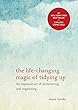
BOOK REVIEW: The Life-Changing Magic of Tidying Up

I sort of cheated with this one; I listened to this as an audiobook, and thank goodness I did that, for while it was short, it was deeply repetitive.  

The Life-Changing Magic of Tidying Up is a well-known, popular book about declutter by Japanese author Marie Kondo.  Marie Kondo is a former Shinto shrine maiden who is now a decluttering consultant and has developed a way of decluttering that dumps everything in a certain category (i.e. clothes, books, etc.) from every room in the house into one big pile and sorting it by deciding what you want to keep.

Kondo's small book is persuasive in inspiring one to declutter in a sincere, conversational tone. I enjoyed her focus on thinking on what you want to keep, rather than what you want to throw away. Her idea is that everything that you like (or in her words, that "sparks joy.") should be kept, and that you will feel less stressed and much happier for it, and that everything else is free to discard or donate. I also liked her idea of getting all categorized items in the entire house in the same pile, rather than proceeding room by room. She has a good point about things such as forgetting about coats in a closet down the hall, and allowing one to notice better any potential duplicates.

Kondo might seem difficult to relate to, as she asks for a lot of time and initial familial peace about decluttering one's possession. She also speaks often on the spirit and emotions of objects, which may seem off-putting to some; I personally found it charming. However, I did question her confidence of having no customers with any relapses; it does show her commitment to helping others declutter.

Unfortunately, listening to this book did not necessarily help me clean or declutter. I have already begun my decluttering journey for a few years now (slowly, one small chunk at a time, something Marie Kondo would not approve of). So part of the book seemed like it was preaching to the choir. That aside, the book was still very repetitive, with certain maxims from Kondo seeming to pop up every chapter. Also due to my personal living situation (I have many things in storage, a currently very small living space, and little familial support), I was unable to actually enact her method. Maybe I can properly test it out when I move.

My personal situation aside, I enjoyed some of her humorous anecdotes about her clients, but I found the overall tone too serious for The Life-Changing Magic of Tidying Up to be called my favourite decluttering book. That crown belongs to Clutter's Last Stand by Don Aslett, which does not have such a rigid, spelled-out method, but makes up for it with more humour sprinkled throughout and less repetition.

In any case, if you are starting to get claustrophobic and antsy in you own home and are looking for inspiration to declutter, I would recommend either The Life-Changing Magic of Tidying Up or Clutter's Last Stand. Whichever book suits your tastes and personally you to declutter is the most important thing, whether you prefer sincere structure or cheerful goading. Both books should be available digitally or from your local library if you're afraid of adding to your clutter pile.

You can support me by purchasing this book on amazon:


Friday, May 13, 2016

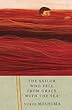
BOOK REVIEW: The Sailor Who Fell From Grace With the Sea

Yukio Mishima is a famous Japanese author almost as famous for his highly public suicide as he is for his literature. For years, I had heard his name quietly mentioned in bookstores' "Recommended Authors" displays and have seen his books under lists of notable novels. Particularly, The Sailor Who Fell From Grace With the Sea always caught my eye with its plethora of masterfully designed covers. For years I felt unsure if the plot would interest me or would be too serious, but it nagged at the back of my mind; until, finally, I bought a very cheap paperback version of it off eBay.

The Sailor Who Fell From Grace With the Sea stars a young 12 year old boy named Noburu who, pardon my French, is a little shit. He acts all contrite to his mother, but then finds a peephole in the wall to watch his single mother change clothes at night. He then hangs out in reclusive spots by the docks in his port town and brags about his newfound, sexual knowledge of the female body, and all of his friends nod sagely and feel that this contributes to their wholly, "authentic," amoral philosophy and allows them to rebel from their boring, middle-class, childish existence. One might find them slightly sympathetic characters, like Catcher in the Rye's Holden Caulfield, if they didn't turn out to be blatant psychopaths. Their wanton violence against pitiful creatures completely turned me off of this book.

The book's plot doesn't really move until the Noburu's mother starts dating a sailor named Ryuji. Noburu has a deep interest in boats, and initially idolizes Ryuji; yet this quickly fades when Ryuji considers quitting his lonely sailor's life to marry Noburu's mother. Initially, I considered this to be a metaphorical representation of Ryuji as Japan with his sailor profession representing pre-WWII Japanese masculine culture, Ryuji's giving up of his profession as a representation of post-WWII Japanese culture. This would explain Noburu's youthful perspective having such intense, instantaneous disdain for Ryuji after his abandonment of the profession and marriage to his mother; yet this seems flawed as Noburu does not seem to represent a reliable perspective, having seemingly no capacity for empathy.

Perhaps I would have enjoyed this book more if we had a larger point-of-view from that of Ryuji; however, I found Noburu to be largely unlikable and unnecessarily violent. Noburu's perspective was largely emotionless, barring his intense joy at the sight of boat mechanics and his intense anger at Ryuji. This left the supposedly-emotional breakthrough of Ryuji, and the ending of the book seem rather hollow. Also I feel that Mishima was trying to deliver a metaphor of some sort, but it got lost in the murkiness of preadolescent, psychopathic behavior.

However, Yukio Mishima is still a well-known author of Japanese literature and has many more novels that he has written, so perhaps I will give him another go. Perhaps other with a stronger stomach for violent children will find something to enjoy in The Sailor Who Fell From Grace With the Sea, although it wasn't to my particular taste. It is, at least, a thankfully short adventure.

You can support me by purchasing The Sailor Who Fell From Grace With the Sea at amazon:

Friday, May 6, 2016

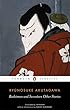
BOOK REVIEW Rashomon and Other Stories

It is a sad reality that a surprising number of famous Japanese authors have been both rumoured and confirmed to have died from suicide: Osamu Dazai, Yukio Mishima, Yasunari Kawabata, and also Ryuunosuke Akutagawa.

Ryuunosuke Akutagawa is a well known Japanese author of numerous short stories, of which the collection Rashomon and Other Stories is the only collection to be translated and printed into English. Akutagawa's most well-known stories are "In a Grove," and "Rashomon." There is a famous 1950 movie directed by Akira Kurosawa that takes the plot from "In a Grove," and the plot from "Rashomon," which is usually the primary reason Western readers are inspired to seek out his work.
Like any good short story collection, Rashomon and Other Stories needs to have a majority of well-written, well-liked, memorable stories. Such stories can be found immediately with "In a Grove," about conflicting testimonies regarding a rape and murder in a bamboo grove and "Rashomon," about a poor man who considers theft. Those were my two favourite stories from this collection. The characters and moral dilemmas presented stay with the reader long after the stories are finished.

These two are quickly followed by other favourites such as "Hell Screen" about a court painter putting his entire being into painting the eight scenes of Buddhist hell for his lord, and "" about a Japanese woman in feudal times ostracized by her village for joining the Christian religion. There is a sense of awe and horror left with the reader regarding humanity's devotion to theological deities and the depravity of human behaviour resulting from intolerance for others' religious devotions.

Some less poignant but still likable stories include "The Nose," humourously about a priest obsessed with having an overly long nose. Unfortunately, the collection falls apart near the end with the stories published very close to Akutagawa's death. The final story, "Spinning Gears," in his collection is one that is a kind of fragmented, stream of consciousness narrative that does little more than confuse the reader. They also serve as a sad reminder of the author's failing mental health at the end of his life.

Despite the lackluster of the final couple of stories, I would strongly recommend Rashomon and Other Stories for those who are interested in Japanese culture or history, or those who enjoy short stories with meaningful moral dilemmas.

You can support me by purchasing Rashomon and Other Stories at amazon:

Friday, April 29, 2016

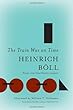
BOOK REVIEW: The Train Was On Time

Today, I finished reading a relatively unknown classic of German literature: The Train Was On Time by Heinrich Boell.

The Train Was On Time is set during World World II and explores the perspective of a German soldier, Andreas, riding on a train to be delivered to the battlefield who feels an absolute certainty about his impending death. Along the way, he befriends two other soldiers and a Polish girl from a brothel, as well as heavily contemplating whether his fate is avoidable or inevitable. He also struggles with coping with opportunities lost, what it means to win a war, and what experiencing feelings of love for another person means in one's life.

The book has no chapters and is told in a stream of consciousness narrative style from Andreas' perspective. This gives Andreas a unique voice as a character and really helps one empathize with his plight and growing sense of dread. The lack of a pause for a chapter transition wasn't found to be too burdensome or weary as the book is very short: rounding out at about 120 pages.

I would recommend The Train Was On Time to anyone interested in German history, culture, or literature; World War II history; or anyone just interested in hearing an empathetic war story. Hearing Andreas' calmly panicking thoughts and remarks on the world around him keeps the reader riveted and curious about his ultimate fate and that of his friends. I found the ending to be quite a surprise as well. It is an inexpensive and short venture, yet it is a novella that will keep you thinking long after you've finished it.

You can support my by purchasing The Train Was On Time on amazon.com:

Friday, April 22, 2016

BOOK REVIEW: Salt, Sugar, Fat

I finished Michael Moss' Salt Sugar Fat: How the Food Giants Hooked Us today.  This is a nonfiction journalistic piece describing the American processed food industry.  It dabbles into the history of the processed food industry from the, rather recent, founding of the industry all the way through to the conglomeration of these small companies into mega-corporations, and on to the increase in market demand and competition between these corporations concurrent with the rise of the Digital Age.
Moss' fundamental thesis is that the processed food industry is founded on producing quick yet nutritionally deficient food.  Relying on this food will kill us, but trying to change the formula of ready-made food renders it fundamentally inedible.  Therefore, our only hope as consumers is to avoid processed food as much as possible and to cook food from scratch whenever possible.
I feel this is a very important message that all people should know about the food in their local grocery store, and Moss delivers it in a clear, easy to comprehend manner.  My only qualms are that he at times would be better suited being a bit more concise; and by dividing the book into the three categories of Sugar, Fat, and Salt, he sometimes is a little repetitive  This doesn't stop me from highly recommending this book to anyone concerned about nutrition.
You can support me by purchasing Salt Sugar Fat from amazon: